ISO 50001 is a voluntary international standard that provides the framework for implementing an Energy Management System (EnMS) in organizations of any sector. Its main objective is to help companies (especially industrial-sized ones) achieve continuous and sustainable improvement in their energy performance, including efficiency and consumption.
Currently, at the industrial level, energy efficiency has become a pillar of business competitiveness thanks to its benefits of process optimization and reduced environmental impact. However, ISO 50001 is an international standard that is used as a reference framework (and is voluntary) for efficient energy management strategies in organizations across all sectors.
It is important to understand that, in the Mexican industrial sector, ISO 50001 is a guide that helps institutionalize energy management. In other words, it is not just about isolated actions (changing motors, insulating pipes, improving lighting), but about having a management system that integrates policies, responsibilities, measurement, goals, and verification, with commitment from senior management and continuous improvement. Its ultimate goal is not only to reduce consumption, but also to achieve continuous and sustainable improvement in long-term energy performance.
Importance of the 50001 standard in industry
For industrial companies, particularly those in the manufacturing or energy sectors, the ISO 50001 standard offers several key benefits:
- Cost reduction: by optimizing the use of electrical energy, the value of the electricity bill is reduced, which improves the profitability of the business.
- Regulatory compliance and access to incentives: although it is a voluntary standard, its adoption facilitates compliance with other government regulations on energy efficiency. In addition, in Mexico, the CFE provides incentives to companies that adopt energy-efficient consumption strategies.
- Improved competitiveness and reputation: Certification demonstrates environmental commitment and operational efficiency to demanding customers, partners, or supply chains.
- Climate change mitigation: By reducing energy consumption and losses, the carbon footprint is reduced. Although the standard does not mandate specific emission reduction targets, many companies use it as a framework for achieving them.
Requirements of the ISO 50001 standard
ISO 50001 details a series of requirements that an organization must meet to establish an effective EnMS. These requirements include:
- Energy policy led by senior management and focused on improving energy performance, efficiency, and regulatory compliance, ensuring the availability of resources.
- Energy planning that analyzes significant energy uses and current consumption. With this, define energy performance indicators, objectives, and targets, and action plans to achieve them.
- Implement operational controls to ensure that energy-consuming equipment and processes operate efficiently. This should include staff training and adequate supply chain management.
- Establish a system for measuring, analyzing, and evaluating energy performance to verify the effectiveness of what has been implemented, corrective actions in case of deviations, and/or record keeping.
- Periodic review of the SGEn by senior management to ensure its continuity, adequacy, effectiveness, and opportunities for improvement.
Best practices for complying with ISO 50001
To implement and maintain a successful ISO 50001 energy management system, the following practices are recommended:
- Training and awareness for all staff, from operators to managers, on the importance of energy efficiency.
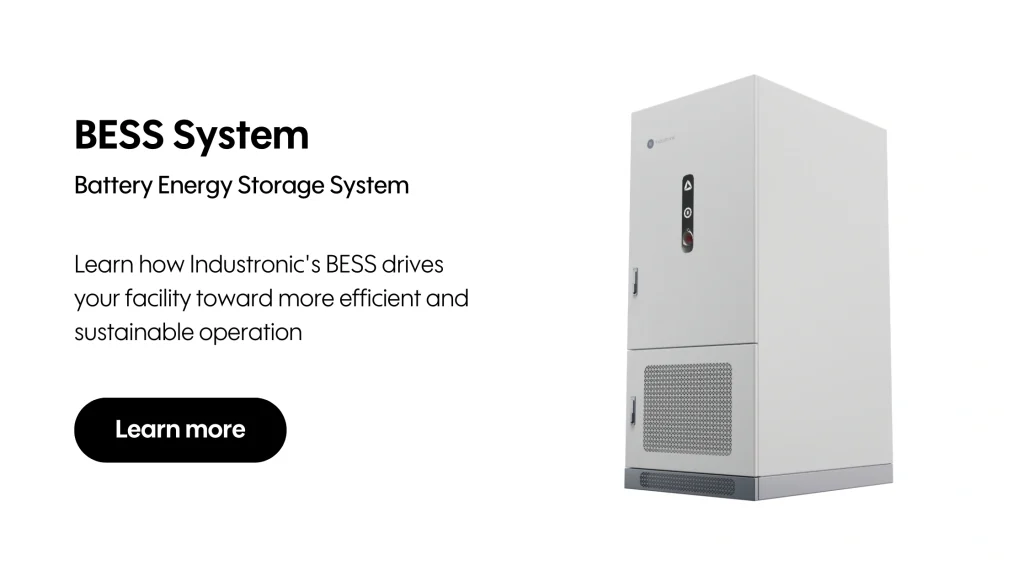
- Investing in more efficient technologies, such as variable frequency drives and industrial automation systems that allow precise control of consumption. Other more advanced technologies such as BESS or solar panels significantly contribute to successful energy efficiency results in high-demand companies.
- Real-time monitoring with energy management and monitoring systems to obtain consumption data, identify anomalies, and make informed decisions. In this case, Industronic’s EMS are cutting-edge technologies designed to respond to this best practice.
- Return on investment analysis: evaluate proposed projects economically, consider tax incentives or government support.
- Benchmarking: compare the energy performance of the plant with that of other similar plants to identify best practices and set more ambitious goals.
Frequently asked questions about the 5001 standard
What is the ISO 50001 standard?
ISO 50001 is an international standard that establishes the requirements for the design, implementation, maintenance, and improvement of an Energy Management System (EnMS). Its purpose is to help companies improve their energy performance, including energy efficiency, use, and consumption.
Unlike other standards that dictate specific technical parameters, the ISO 50001 energy management system focuses on a systematic management approach, similar to that of ISO 9001 (on quality) or ISO 14001 (on the environment).
Which companies should apply the ISO 50001 standard?
The ISO 50001 standard is not mandatory, but it is highly recommended for energy-intensive companies, such as those in the manufacturing, cement, energy, steel, or chemical sectors. As it is a standard with a systemic approach, it can be adapted to different scales and complexities. For this reason, the National Commission for the Efficient Use of Energy in Mexico (CONUEE) has promoted its implementation in sectors such as hospitality and transportation, demonstrating its versatility for companies of any size.
How to start the ISO 50001 certification process?
The certification process for an ISO 50001 energy management system generally involves the following steps:
- Assess the current state of the company’s energy management.
- Plan and design the EnMS with objectives and procedures.
- Implement the action plan, including staff training and the application of operational controls.
- Adjust and correct before the external audit.
- An external and independent certification body evaluates compliance with all requirements of the standard.
What are the benefits of the ISO 50001 standard?
In addition to reducing costs and increasing competitiveness, the main benefits of implementing an ISO 50001 energy management system include:
- Improved environmental performance by reducing greenhouse gas emissions.
- Strengthened legal compliance.
- Improved decision-making by providing reliable data for strategic energy management.
- Increased operational efficiency and process optimization that goes beyond energy consumption.

Consult our experts for the best option to protect your electrical installation
Our team will provide you with personalized advice